Qwen-Image 2.0 API
Qwen-Image 2.0 from Alibaba — an image model built around legible in-image text, including Chinese, with reference-image input and 1K or 2K output.
from 3 credits ≈ $0.038 per image
- Resolutions: 1K · 2K
- Images per request: 4
- Reference images: up to 4 per request
Pricing
Cost = credits per image × n. Credits are reserved when you submit a job and refunded in full if it fails or you cancel it before it starts.
| Resolution | Credits / image | USD / image | USD for 4 images |
|---|---|---|---|
| 1K | 3 | $0.038 | $0.15 |
| 2K | 4 | $0.05 | $0.20 |
USD figures are converted at the Scale pack rate; larger packs are cheaper per credit. See pricing for the full pack list.
List prices elsewhere
Publicly listed per-image prices for comparable access to this model, read from each provider's own pricing page. Providers change prices without notice — follow the links for the current figure.
| Provider | List price per image | Checked on |
|---|---|---|
| genmux API (1K) 3 credits · at the Scale pack rate | $0.038 | live |
| Alibaba Cloud Model Studio (qwen-image-2.0) Alibaba's own list price for image generation, per image (international region). | $0.035 | 2026-09-06 |
What 1,000 images cost
1,000 images: $37.50 with genmux API vs $35.00 at the list price of Alibaba Cloud Model Studio (qwen-image-2.0).
Per-image price × 1,000, at the Scale pack rate; competitor figures as checked on 2026-09-06.
Sample outputs
Unretouched outputs from this model, generated through the API.
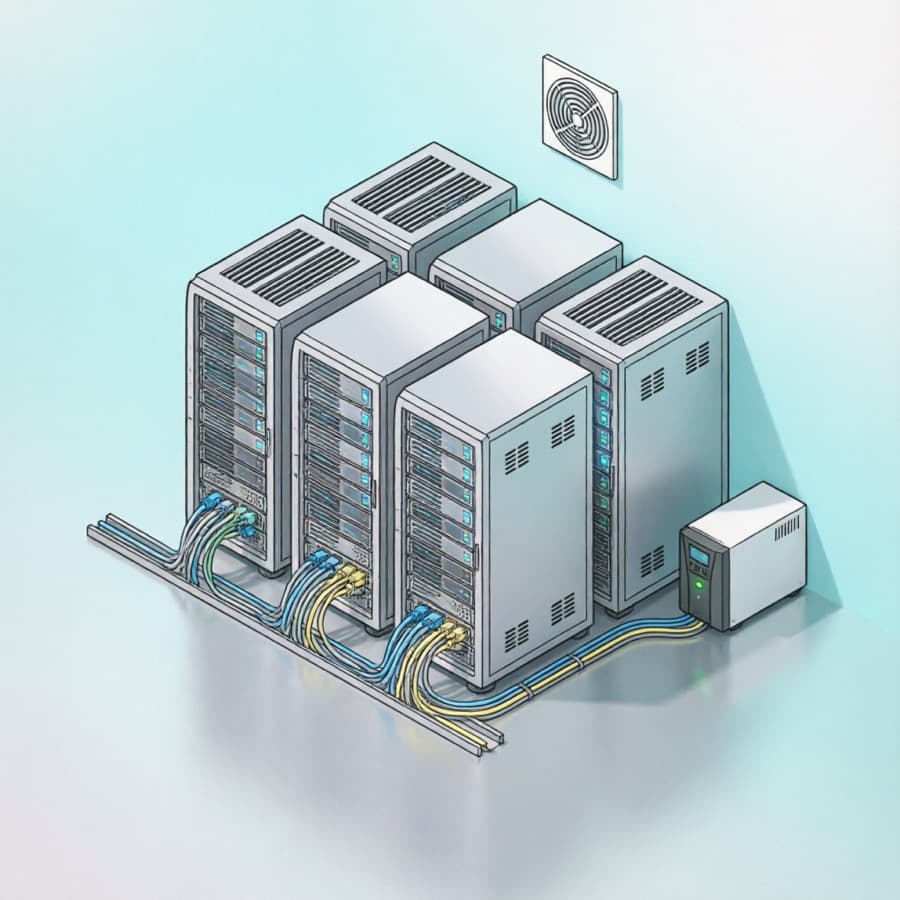
isometric data center clean vector style
At a glance
- Model id
- qwen-image-2
- Capability
- image.generate
- Resolutions
- 1K · 2K
- Aspect ratios
- 1:1, 16:9, 9:16, 4:3, 3:4, 3:2, 2:3, 5:4, 4:5, 21:9
- Images per request
- 4
- Seed
- supported
- Reference images
- up to 4 per request
- Negative prompt
- supported
- Prompt length
- up to 2000 characters
Quick start
Create a key in the dashboard, then submit a job and poll it. Replace the id in the second call with the one the first call returns.
1. Submit a generation · cURL
curl -s -X POST https://api.genmux.tech/v1/generations \
  -H "Authorization: Bearer $API_KEY" \
  -H "Idempotency-Key: $(uuidgen)" \
  -H "Content-Type: application/json" \
-d '{"model":"qwen-image-2","prompt":"a red fox in fresh snow, low winter sun","n":1,"resolution":"1K","ratio":"1:1"}'{
"id": "0d8b6a3e-2f1c-4a5b-9c1d-7e2f3a4b5c6d",
"model": "qwen-image-2",
"status": "queued",
"params": {"prompt": "a red fox in fresh snow, low winter sun", "n": 1, "resolution": "1K", "ratio": "1:1"},
"cost": 3,
"created_at": "2026-08-30T20:01:12.345Z"
}2. Poll until status is succeeded (typically 1–20 s) · cURL
curl -s https://api.genmux.tech/v1/generations/0d8b6a3e-2f1c-4a5b-9c1d-7e2f3a4b5c6d \
-H "Authorization: Bearer $API_KEY"{
"id": "0d8b6a3e-2f1c-4a5b-9c1d-7e2f3a4b5c6d",
"model": "qwen-image-2",
"status": "succeeded",
"cost": 3,
"images": [
{"index": 0, "url": "https://…/0.png?X-Amz-Expires=900&…", "expires_at": "2026-08-30T20:16:30Z", "mime": "image/png", "width": 1024, "height": 1024, "bytes": 1843201, "sha256": "9f2c…"}
],
"created_at": "2026-08-30T20:01:12.345Z",
"finished_at": "2026-08-30T20:01:19.802Z"
}Python (requests)
import os, time, uuid, requests

BASE = "https://api.genmux.tech"
auth = {"Authorization": f"Bearer {os.environ['API_KEY']}"}

job = requests.post(
    f"{BASE}/v1/generations",
    headers={**auth, "Idempotency-Key": str(uuid.uuid4())},
    json={"model": "qwen-image-2", "prompt": "a red fox in fresh snow, low winter sun", "n": 1, "resolution": "1K", "ratio": "1:1"},
    timeout=30,
).json()

while job["status"] in ("queued", "running"):
    time.sleep(1)
    job = requests.get(f"{BASE}/v1/generations/{job['id']}", headers=auth, timeout=30).json()

print(job["images"][0]["url"])  # presigned, valid for 15 minutes
Node.js (fetch)
const BASE = "https://api.genmux.tech";
const auth = { Authorization: `Bearer ${process.env.API_KEY}` };

let job = await fetch(`${BASE}/v1/generations`, {
  method: "POST",
  headers: { ...auth, "Idempotency-Key": crypto.randomUUID(), "Content-Type": "application/json" },
  body: JSON.stringify({ model: "qwen-image-2", prompt: "a red fox in fresh snow, low winter sun", n: 1, resolution: "1K", ratio: "1:1" }),
}).then((r) => r.json());

while (job.status === "queued" || job.status === "running") {
  await new Promise((r) => setTimeout(r, 1000));
  job = await fetch(`${BASE}/v1/generations/${job.id}`, { headers: auth }).then((r) => r.json());
}

console.log(job.images[0].url); // presigned, valid for 15 minutesFrequently asked questions
- What is the Qwen-Image 2.0 API?
- Qwen-Image 2.0 is Alibaba's image-generation model from the Qwen-Image line, a family the Qwen team introduced with an explicit focus on rendering legible text inside the picture — including Chinese characters — and on editing an image you supply. Through genmux API the Qwen-Image API is the model id "qwen-image-2": it renders at 1K, 2K, takes up to 4 reference images per request and costs 1K — 3 credits · 2K — 4 credits.
- How much does one Qwen-Image 2.0 image cost?
- From 3 credits per image, about $0.038 at the Scale pack rate. Price follows the resolution tier: 1K — 3 credits · 2K — 4 credits. A request for n images costs n times the per-image price. Credits are prepaid, so there is no subscription and no per-seat fee.
- How is Qwen-Image 2.0 different from Qwen-Image Max?
- Max is the flagship of the line and costs more per image here; 2.0 is the standard tier. This model renders at 1K, 2K and takes up to 4 reference images, where Max is restricted to a fixed, narrower set of aspect ratios. The request fields are otherwise the same, so comparing the two is a one-field change — put the same prompt and seed through both and read the two spec tables side by side.
- When should I use Qwen-Image 2.0 instead of Nano Banana?
- When the text in the image is the point: posters, packaging mockups, UI screenshots, slides, anything with a headline or CJK copy that has to come out readable. The Qwen-Image line was built around that case. Nano Banana is the general-purpose default — compare the two pricing tables and pick per job. Both accept reference images, share one API key and draw on the same credit balance.
- What resolutions does Qwen-Image 2.0 support?
- Resolution is a tier, not a pixel size: this model renders at 1K, 2K, and the request defaults to 1K when you omit the resolution field. A tier outside that list is rejected with a 400 validation_error rather than quietly downscaled, so you always know which price you are paying. The legacy size field ("1024x1024") still works for existing integrations and is mapped to the nearest tier and ratio.
- What aspect ratios can I ask for?
- 1:1, 16:9, 9:16, 4:3, 3:4, 3:2, 2:3, 5:4, 4:5, 21:9. Pass it as the ratio field; it defaults to 1:1. A ratio outside the list is a 400 validation_error. Ratio never changes the price — only the resolution tier does.
- Can I send reference images (image-to-image)?
- Yes. Pass images as an array of public https URLs — up to 4 per request — and the prompt then describes the edit or the variation rather than the whole scene; with reference images the prompt itself is optional. URLs must be reachable from the public internet: private hosts and non-https URLs are rejected with a 400 validation_error.
- Is there a negative prompt?
- Yes. Pass negative_prompt alongside prompt to describe what you do not want in the frame — artefacts, text, watermarks, a colour you are steering away from. It costs nothing extra.
- How many images can I generate in one request?
- Up to 4 per call, via the n field. Each image is billed separately, so n=4 at 1K costs 4 times the per-image price. For larger batches submit several jobs — throughput is bounded by your account's in-flight job limit (20 by default), not by n.
- Are generations reproducible? Does it support seeds?
- Yes. Pass an integer seed alongside the prompt, and the same seed with the same prompt, resolution and ratio gives you a reproducible result — which is also how you compare two models fairly. Leave it out and each call is sampled independently.
- How long does a generation take, and do I have to poll?
- Typically 1–20 seconds from submit to succeeded, depending on the resolution tier and queue depth. The API is asynchronous: POST /v1/generations returns a job id in milliseconds, and from there you either poll GET /v1/generations/{id} or pass webhook_url and let us POST you once the job finishes, retrying with backoff for up to 8 attempts until your endpoint returns 2xx. Every delivery carries an HMAC-SHA256 signature you verify with your account webhook secret.
- What happens if a generation fails?
- You are not charged. Credits are reserved when the job is created and refunded in full if the job fails, is cancelled while still queued, or the model is temporarily unavailable (503 model_unavailable). The failed job carries an error object with a code such as content_policy so you can branch on it.
- What stops me from being double-charged on a retry?
- Every POST /v1/generations requires an Idempotency-Key header. Resending the same key returns the original job with 200 and charges nothing extra, so a network timeout can be retried safely. Reusing a key with a different body is rejected with 422 idempotency_key_mismatch.
- Can I use the generated images commercially?
- Yes — under our terms of service you own the rights we can pass on to the output of your generations and may use them commercially, provided the prompt and the use comply with the terms and the upstream model provider's content policy. Read the terms before shipping anything customer-facing.
Keep reading
- genmux MCP server: images from Claude, Cursor and OpenCode
Install @genmux/mcp with one npx command and let Claude, Cursor, OpenCode or Continue list models, estimate cost and generate Nano Banana images.
7 September 2026
- Rate limits and queueing for image generation pipelines
Designing an image generation pipeline that survives traffic spikes: per-key RPS, max in-flight jobs, client-side queueing, backoff and capacity math.
30 August 2026
- Nano Banana vs Nano Banana Pro: when 2× is worth it
A practical comparison of the two Nano Banana models: quality, prompt adherence, supported resolutions, latency and cost — with concrete guidance by use case.
30 August 2026
Other models
Same key, same request shape — switch by changing the model field.
Nano Banana API
nanobananaFast, general-purpose text-to-image and image-to-image generation at 1K, behind a single HTTP endpoint. Billed per image in credits, refunded automatically when a job fails.
from 2 credits ≈ $0.025 per image
Nano Banana Pro API
nanobanana-proHigher-fidelity generation for hero shots and print-sized crops, with 1K, 2K and 4K output — roughly twice the base price per image at 1K.
from 4 credits ≈ $0.05 per image
Qwen-Image Max API
qwen-image-maxQwen-Image Max — the flagship of Alibaba's Qwen-Image line, with reference-image input, 1K and 2K output and a fixed set of five aspect ratios.
from 8 credits ≈ $0.10 per image
Seedream 5.0 API
seedream-5ByteDance Seedream 5.0 — a high-resolution model for photoreal frames and in-image text, served at 2K and 4K only. Takes reference images, billed per image in credits.
from 16 credits ≈ $0.20 per image
Wan 2.7 Image API
wan-2-7-imagewan2.7-image from Alibaba's Tongyi Wanxiang line — text-to-image and reference-image generation at 1K or 2K, on the same endpoint and API key as every other model here.
from 2 credits ≈ $0.025 per image
Text models (10)
Doubao Seed 2.0 Pro API
ByteDance's flagship Doubao model with vision and web search — for complex reasoning and multimodal tasks.
$1.063 in · $5.10 out per 1M tokens
Doubao Seed 2.0 Code API
Doubao's coding-tuned model with vision — for agentic coding, refactors and UI-from-screenshot tasks.
$1.063 in · $5.10 out per 1M tokens
Doubao Seed 2.0 Lite API
Mid-tier Doubao model with vision — general assistants and image-aware chat at a lower cost than Pro.
$0.213 in · $1.063 out per 1M tokens
Doubao Seed 2.0 Mini API
The cheapest Doubao model with vision — high-volume, latency-sensitive chat and simple image tasks.
$0.027 in · $0.85 out per 1M tokens
Kimi K3 API
Moonshot's flagship Kimi model with a huge context window — for very long documents and multi-step agents.
$2.463 in · $12.323 out per 1M tokens
Claude Opus 5.5 API
Anthropic's top Claude Opus model — strong reasoning and agentic coding with a large context window for complex, multi-step work.
$1.836 in · $9.18 out per 1M tokens